Resolutions are in full swing for 2026, and you can tell by the fact that your gym is packed and there’s no room where to put your stuff. Part of me is glad to see people working out but I’ve been at this fitness thing long enough to know it won’t last. I should have my favourite cubby available again within two weeks.
The big news for me this month is that I’ve decided to ease back into ultimate frisbee after nasty injuries (including dislocating my right shoulder in March; hard to throw a disc without your shoulder) and a busy travel schedule made me put my cleats away. I played last week and while I’m still a solidly mediocre player (I’m learning!), I’m enjoying the rush of adrenaline when I’m on the field and not making a fool of myself.
Ultimate, like hockey or soccer or basketball, is a high-intensity business. When you’re on the field, you’re going hard — unlike long-distance running which is more about endurance. Most of my life I’ve mixed endurance with high-intensity sports, combining long-distance running with martial arts including competitive point sparring. Both types of exercise are extremely valuable for cardio-vascular fitness, health and longevity.
What I didn’t know until this week is that high-intensity exercise is about four times as effective as the other kind when it comes to health and longevity benefits.
Colour me gobsmacked.
There are various ways to measure intensity, including by wearing trackers and tracking METs or zones. Or, for people who are new at this and don’t like trackers, there’s a simple test: If you can talk and sing easily during exercise, it’s light intensity. If you can talk but not sing, it’s moderate intensity. If you can’t do either, you’re doing high intensity exercise.
Personally, I track my METs and my heart rate using my Apple Watch. I also measure my total “active calories” and workouts to make sure I’m working out long enough every day to make it count. I aim for at least 600 active calories per day and my runs and gym sessions routinely get me METs above 6, so that’s intense enough for most days.
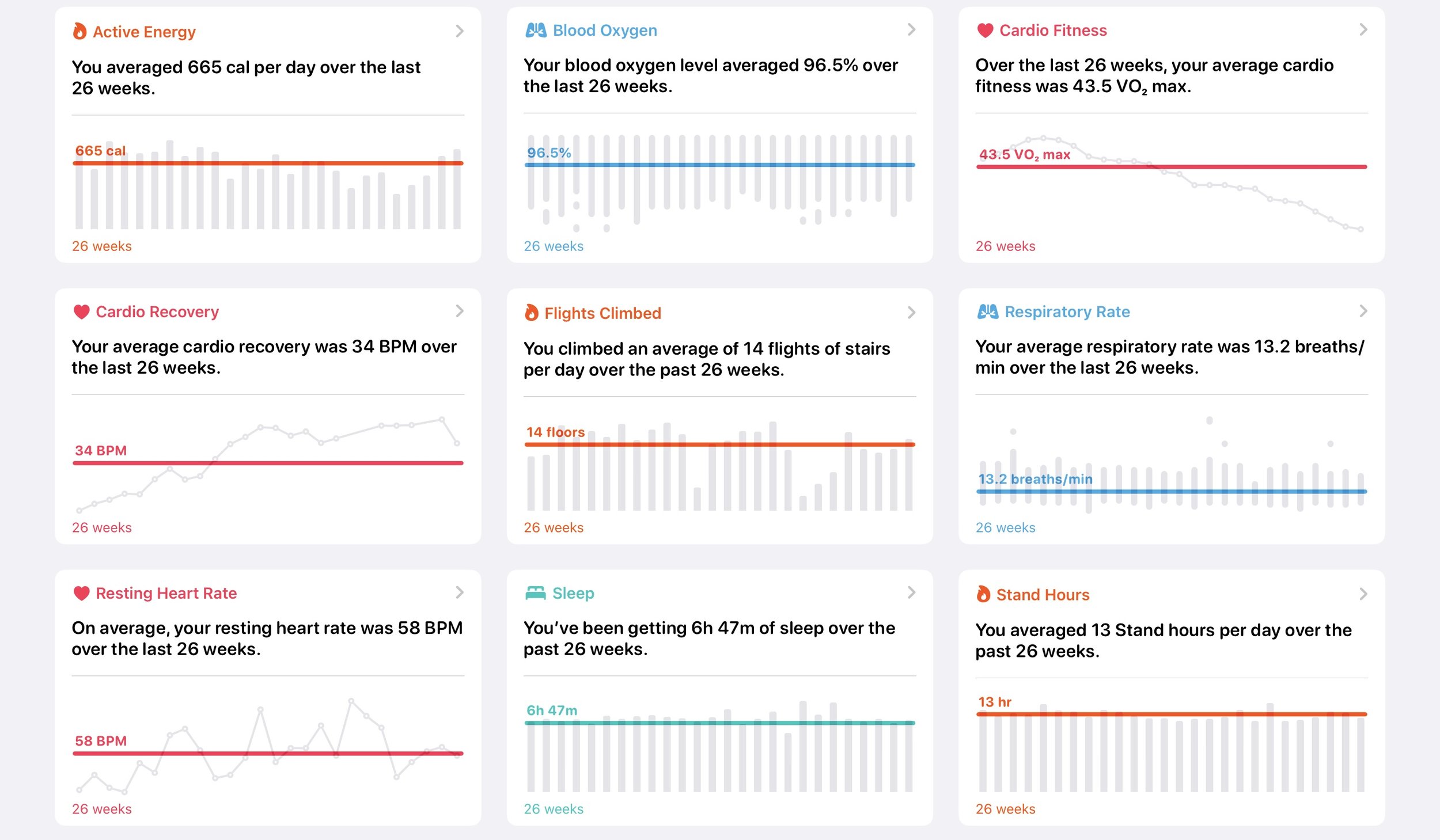
Apple Health does all the math for you and gives you half-year averages and over the last 26 weeks I’ve burned 665 calories a day, had a blood oxygen level of 96.5%, a 43.5 VO2 max, 58 for resting heart rate, 6h47m of sleep, over 12K steps a day on average and 1h43m per day spent working out. I don’t do resolutions, but the metric I am most urgently aiming to improve is my sleep. I want it close to 7h30m a night, which is hard when you’re perimenopausal and “enjoying” night sweats, insomnia, and the latest treat, nocturnal panic attacks but hey, nobody said the job would be easy.
What are your fitness goals for 2026?